WISMO Explained: What Is WISMO, Why It Happens, and How to Reduce It
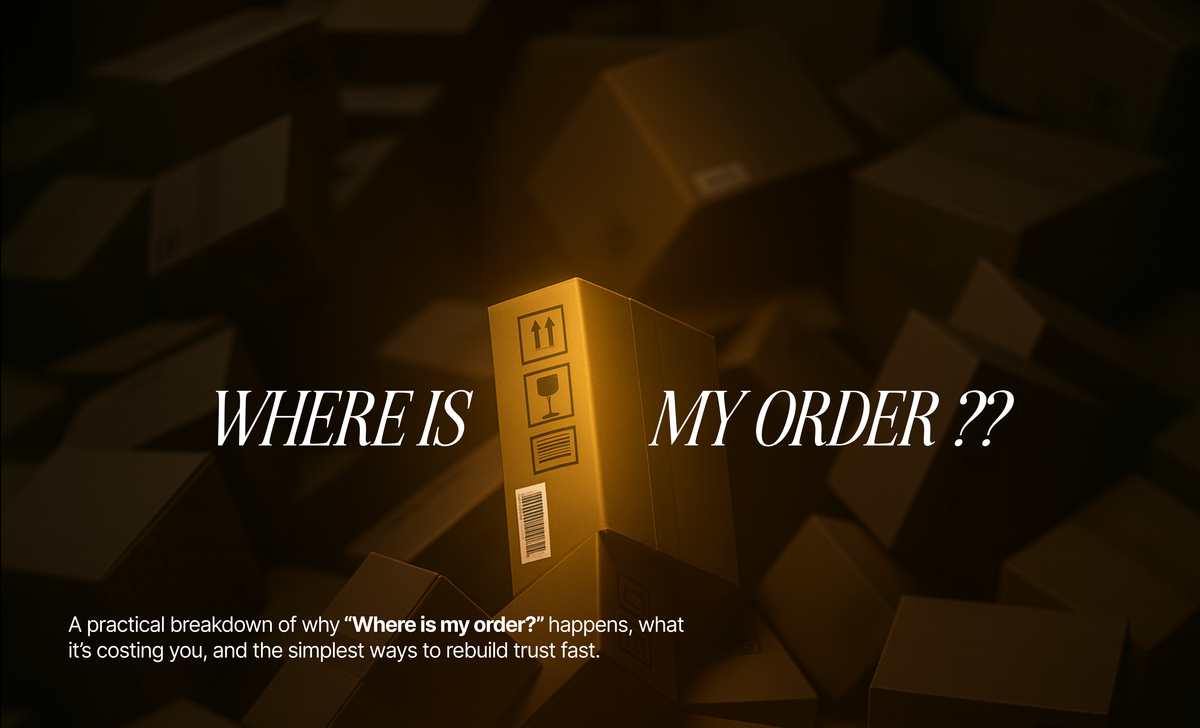
If you run an ecommerce brand, especially on Shopify, you have probably experienced WISMO without even realizing it. It stands for “Where Is My Order” and refers to customers contacting your support team to ask about order status, shipment updates, or delivery timelines.
Your inbox fills up. Live chat keeps pinging. And most of the messages look the same: “Where is my order?” “Has it shipped?” “When will it arrive?” These repetitive order-status requests may seem small at first, but they quickly add up.
The real challenge begins when WISMO calls start increasing. Support agents spend hours answering the same questions, productivity drops, and operational costs slowly rise.
In this blog, we will clearly explain what is wismo, why it happens so often, what impact it has on your business, and how you can reduce it without overcomplicating anything.
Table of Contents
- What Is WISMO?
- Causes of WISMO
- Impact of WISMO on Ecommerce Brands
- Strategies to Reduce WISMO Calls
- FAQs
- Conclusion
What Is WISMO?
Wismo refers to all inbound customer queries about order status and delivery updates. When a customer asks, “Where is my order?” that is wismo. When they ask for a tracking link, that is also wismo. When they ask why the delivery is late, that is still wismo.
These questions usually include:
- Has my order been shipped?
- Can you send my tracking details?
- Why is my package delayed?
- When will my order reach me?
All of these are part of wismo.
Hence, WISMO simply means customers asking about their order because they do not have enough information about the product they ordered.
Causes of WISMO
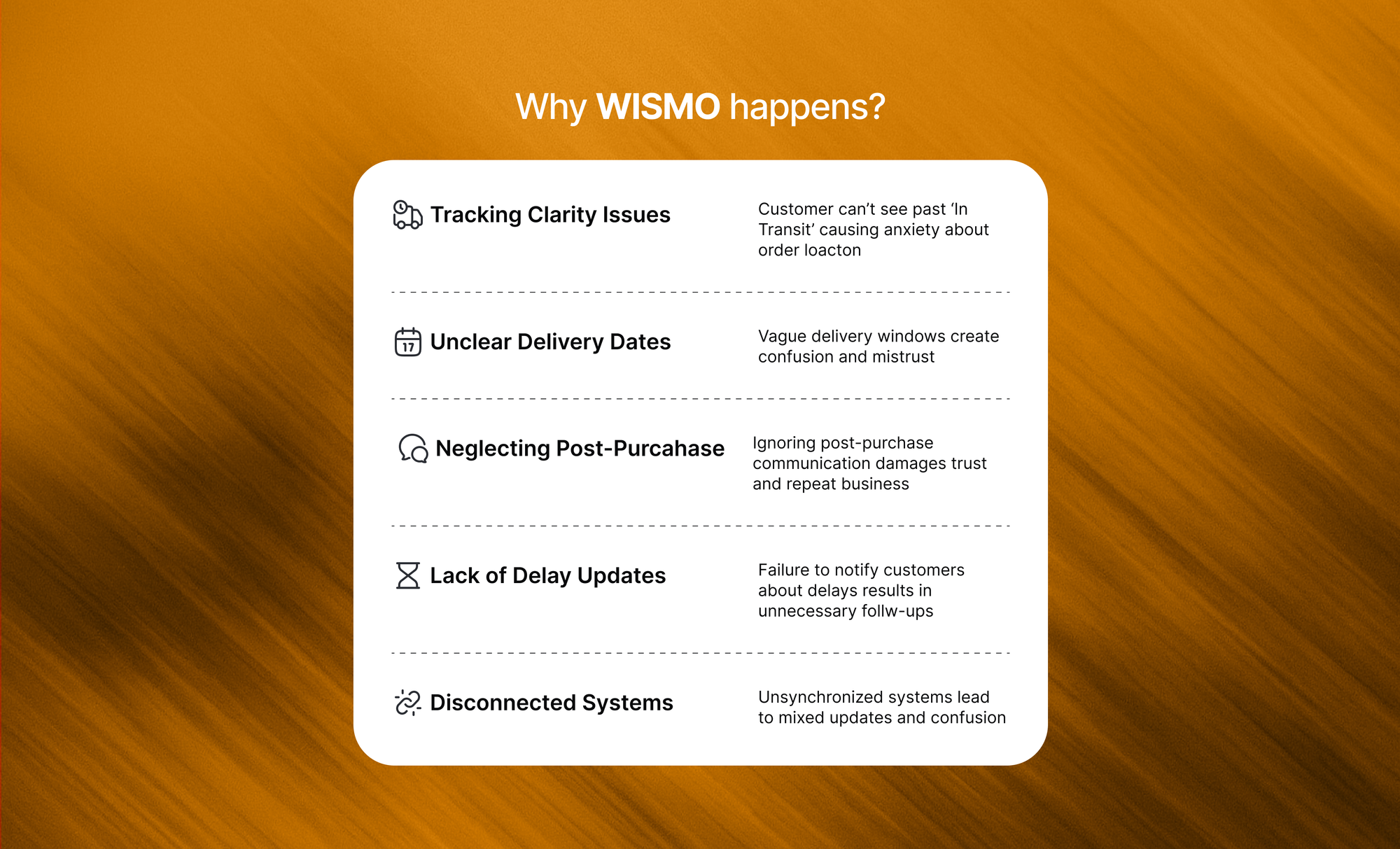
1) Lack of Information
Most wismo requests are raised when customers are not updated in real time about their shipment. If there is silence after the order is placed, customers start worrying.
If tracking updates are delayed or unclear, wismo naturally increases.
2) Vague Delivery Dates
One common reason brands receive wismo queries is unclear delivery timelines.
If you say, “Your order will arrive soon,” that does not mean much. Soon can mean tomorrow or next week.
If you say, “Your order will arrive on 9th July,” it gives clarity. Clear dates reduce wismo requests significantly.
3) Complicated Tracking Process
If customers struggle to find the tracking link in their email, they will contact support.
Sending them to a generic FedEx or UPS page without clear guidance makes things confusing. The harder it is to track, the more shipment and tracking requests you will receive.
4) Delivery Errors
There are many reasons why deliveries get delayed. The address might be incorrect. There may be warehouse delays. Weather conditions may slow things down. Carrier capacity issues can also happen.
Some of these are not in your control. But not informing customers clearly will increase order and shipment related requests.
5) High Customer Expectations
Today, customers expect fast delivery because companies like Amazon have made quick shipping normal. Expectations keep rising.
If your communication does not match those expectations, WISMO increases.
In most cases, order-related requests are not just about delivery problems. It is about unclear communication.
Impact of WISMO on Ecommerce Brands
1) Agent Burnout
When agents answer the same wismo calls and requests again and again, it becomes tiring. Repeating “Your order is in transit” all day reduces motivation.
Over time, this repetition lowers productivity and increases frustration within the team.
2) Operational and Management Costs
Every order request costs money. You pay for the agent’s time. You pay for support tools. You pay for management oversight.
If a large percentage of your support tickets are related to wismo, your costs increase without adding real value.
3) Customer Frustration
If customers cannot easily find delivery updates, they feel they have to chase the brand for basic information.
That frustration reduces the chances of them purchasing again. Poor handling of order related queries directly affects customer loyalty.
4) Brand Reputation
Negative reviews often mention shipping experience. Even if your product is excellent, repeated complaints about delivery updates can damage your reputation.
Poor communication leading to high wismo requests can spread through word of mouth quickly.
Strategies to Reduce WISMO Calls
Reducing these queries does not require complex systems. It requires clarity.

1. Make WISMO Tracking Easy
The easier it is to track an order, the fewer customers will ask about it. Instead of sending customers to a generic carrier website, create a branded wismo tracking page on your own store. This keeps everything in one place and makes the process feel smoother and more trustworthy.
When customers can clearly see where their package is and when it will arrive, they feel in control. That sense of control significantly reduces these queries. For many Shopify brands, improving wismo tracking visibility is the fastest way to cut down repetitive support tickets.
2. Use Clear and Simple Language
Many order-related requests are raised because updates are vague or confusing. Avoid technical logistics terms that customers may not understand. Instead of saying “shipment processed,” say “your order has left our warehouse and is on the way.”
Clear language builds confidence. It answers questions before they are asked. When customers understand what is happening with their order, these requests naturally decrease. Simplicity is powerful, especially when explaining delivery timelines.
3. Send Proactive Updates
Customers do not like guessing. If there is a delay, tell them early. If delivery is arriving sooner than expected, let them know that too.
Proactive communication reduces anxiety and prevents unnecessary order-related requests. A short message saying “Your order is delayed due to weather and will arrive on Friday instead of Wednesday” prevents dozens of support tickets. For Shopify brands, regular updates turn silence into reassurance.
4. Set Clear Delivery Expectations
One of the biggest reasons why customers reach out to your team is unclear timing. Saying “arriving soon” creates uncertainty. Giving a specific estimated date creates clarity.
When customers know exactly when to expect their package, they are less likely to check repeatedly or contact support. This reduces both WISMO tracking concerns and follow up messages. Clear expectations protect both the customer experience and your support team’s time.
5. Use Automation Smartly
Instead of making agents answer the same tracking question all day, brands are now using AI for WISMO to automatically pull order status and respond instantly with accurate delivery information. This reduces repetitive workload while still keeping customers informed in real time.
When implemented properly, AI for WISMO simply handles basic tracking questions in the background, so support teams are not overwhelmed with the same order status queries every day. Some Shopify brands Trip Drinks using platforms like kim.cc have seen a steady drop in repetitive wismo calls after structuring this part of their support flow more efficiently.
6. Offer Multiple Communication Channels
Even with great tracking, some customers will still want reassurance. Make it easy for them to reach you through chat, email, or social media. When communication feels accessible, customers feel supported.
Interestingly, accessibility can reduce repetitive order-related requests because customers trust that help is available if needed. For Shopify brands, this builds confidence and loyalty. In the long run, better communication channels make WISMO tracking easier to manage.
FAQs
1) What is wismo?
It stands for “Where Is My Order.” It includes all customer queries related to order status, shipment updates, and delivery timelines.
2) Do order-related requests only occur when deliveries are delayed?
No. These requests can also occur when deliveries are on time, especially if communication is unclear.
3) How do wismo calls affect businesses?
Frequent wismo calls increase support workload, raise costs, and can reduce customer satisfaction.
4) How does AI for WISMO related requests help ecommerce brands?
AI for WISMO helps ecommerce brands automatically respond to order status and delivery questions by pulling real-time shipment information, which reduces repetitive support tickets and improves response time.
Conclusion
Now that we clearly understand what is wismo, it becomes obvious that most of these order-related questions are not caused by delivery problems. They usually happen because customers do not have enough information. When people are unsure about where their package is or when it will arrive, they naturally reach out. That is how repeated wismo calls start increasing.
Reducing these tracking questions is not about responding faster every time. It is about making sure customers do not need to ask at all. Clear delivery dates, simple tracking pages, and regular updates make a big difference. And for growing ecommerce brands, using structured systems like AI for WISMO can handle basic order status questions instantly while keeping the experience smooth.
Whether you improve this internally or with platforms like kim.cc, the goal is simple. Keep customers informed, and the repeated order questions reduce on their own.